Technical Guides
Guide 4: Game Engines, VR/AA and the Metaverse
Introduction
Game Engines
Game engines are purpose-built computer software programs used for the development of computer games, and until the mid-1990's game engines were usually built by computer game companies as proprietary software. In 1995, Epic Games released the Unreal engine used to develop the first-person shooter game Unreal, which it eventually began licensing to other games companies. In 2005, the Danish games company Unity Technologies released the Unity Game engine as free software designed to ‘democratize’ the game industry and streamline the production process of video games, which had hitherto been distributed across a range of different software and programming languages, into one integrated platform. The release of Unity created a boom in ‘indie’ games, or games created by small independent studios while it has also been adopted as an industry standard by larger games companies. In 2014, Unreal released its software for free for the first-time, and together with Unity they have become the dominant game engines used by the industry. In 2023, Unity Engine accounted for 51.3% of games available on the Steam online video game marketplace, while Unreal Engine accounted for 13.5% (Milenovic, 2023). These game engines allow researchers, hobbyists, students and professional game developers to build interactive, digital environments for every type of 2D and 3D games, from action platformers to open worlds to first person shooters as well as create virtual environments for scientific experiments. Core features include the ability to import 3D models of landscapes, architecture, characters and avatars which can be used to construct and navigate the virtual environment. World lighting can be adjusted and the textures of 3D objects, known as shaders, can be customized with varying degrees of realism. Once the virtual world has been built, the developer can add real-world physics such as gravity and cloth and hair simulations. After this, the ‘game-logic’ can be programmed, which creates the rules of the game which the eventual players use to play. Once the game is finished, it can be deployed on a variety of platforms and hardware, from mobile phones to PCs , gaming consoles and virtual and augmented reality headsets. In recent years, free and open-source alternatives to Unity and Unreal Engine have been released such as Godot and GameMaker.
Virtual Reality
Virtual reality (VR) refers to immersive, interactive 3D virtual environments with integrated head and hand tracking and fields-of-view which replicate human vision, deployed on head mounted displays (HMDs) through a variety of hardware devices such as the Meta Quest, HTC Vive, Apple Vision Pro, Sony Playstation VR and the Varjo. The technology was first developed in the 1960's by the father of human-computer interaction Ivan Sutherland, who envisaged the technology as a way for users to physically interact with three-dimensional visualizations of computational logic, environments which he described as a ‘mathematical wonderland’ (Sutherland, 1965). The technology was made commercially available in the earlier 1990's by the computer scientist Jaron Lanier and experienced a mainstream boom in that decade before disappearing until the 2010's when the engineer and entrepreneur Palmer Lucky developed the Oculus Rift headset, which made light-weight, relatively low-cost, high fidelity VR available to the general public. Since this time, VR has taken off in the gaming industry with exercise games (exergames) such as Superhot and BeatSaber gaining mainstream success. At the same time, the technology has increasing been incorporated into experimental research, particularly in the mind sciences such as psychology and neuroscience where the phenomenon of ‘presence’ in VR (the ability of the technology to generate psychological and physiological responses in the body) and the possibility of creating completely controlled environments for clinical experiments has proved to be extremely useful.
Metaverse
The metaverse can be defined as immersive, virtual social spaces which persist beyond the user's real-time engagement that extend the ‘real’ world, rather than offering an escape from it. While the term ‘metaverse’ gained widespread popularity in the early 2020’s with Meta CEO Mark Zuckerberg’s increasing investment in VR, the concept of immersive, multi-user virtual worlds for social interaction and economic exchange predates the nomenclature by several decades. It is in fact the convergence of multiple technologies, including massive multiplayer roleplaying games (MMORPGs) early virtual social platforms like Second Life and now defunct virtual social spaces like Mozilla Hubs and Microsoft's Altspace, and more recent technologies like blockchain and NFTs. Key features of the metaverse include the ability for users to create customized avatars and environments to represent themselves and their worlds to enhance personal expression, the ability to organize virtual gatherings which allow for socializing through casual meetups to large events and the ability to remotely collaborate on projects in real time in an immersive virtual space. The most popular metaverse platforms include Sandbox VR, a blockchain supported metaverse platform which also allows for the purchase of virtual property, the social platform Spatial which emphasizes customization, communities and gaming and the Decentraland which is designed as a metaverse platform for holding large-scale virtual events such as music concerts and performances.
Web3D and Browser-Based Virtual Environments
Alongside dedicated metaverse platforms, browser-based 3D (often called Web3D) has become an important and accessible way to create and share virtual spaces. These environments run directly in ordinary web browsers on computers and phones, without requiring users to download specialised software or apps. Institutions and artists have used Web3D to build virtual exhibitions, cultural archives and interactive showrooms that remain available after physical events end. Frameworks such as A-Frame make it relatively straightforward to construct these scenes using simple HTML and JavaScript.
3D Capture and Scanning for Virtual Environments
Creating content for game engines, VR, AR and web-based spaces no longer depends only on manual modelling. Mobile devices equipped with LiDAR sensors, together with apps such as Polycam, Scaniverse and Abound, allow rooms, objects and outdoor sites to be captured relatively quickly and turned into 3D models. AI-assisted tools can also convert single photographs or short videos into usable 3D assets. These captured models can then be imported into Unity, Unreal, browser-based platforms or metaverse environments, providing a practical bridge between physical spaces and interactive virtual ones.
Together, game engines, Web3D, mobile 3D capture and metaverse platforms give creators a flexible set of tools for building everything from single-user experiences to persistent multi-user virtual worlds.
Tools
[Table]
- Software
- Key features
- Access
- Ease-of-use
Unity 3D
- 3D game engine for creating interactive virtual environments
- [Key features]
- Used for building interactive 3D and 2D games for mobile, PC and VR and AR
- Animate controllable avatars and objects in scene
- Create particle and physics effects
- Design interactive, virtual environments with game logic
- High definition rendering
- Can design interfaces and levels in for game environments
- Uses C# programming language for interaction design
- Design spatial sound environments
- Can be used for developing VR games for all Meta Quest, HTC Vive, Varjo and Apple Vision Pro VR headsets
- Free for students, academic staff and hobbyists.
Unfortunately the mainstream Unity version is no longer available directly in China, Hong Kong and Macau, it has been replaced by Chinese specific version Tuanjie. The original Unity version can still be downloaded via VPN. - Intermediate to advanced
Unreal Engine
- 3D game engine for creating interactive virtual environments
- [Key features]
- Used for building interactive 3D and 2D games for mobile and PC
- Animate controllable avatars and objects in scene
- Create particle and physics effects
- Design interactive, virtual environments with game logic
- High definition, photo realistic rendering
- Can design interfaces and levels in for game environments
- Node based programming (no coding knowledge required)
- Design spatial sound environments
- Free for students, academic staff and hobbyists.
- Intermediate to advanced
Godot
- Open-source 3D game engine for creating interactive virtual environments
- [Key features]
- Used for building interactive 3D and 2D games for mobile and PC
- Open-source
- Animate controllable avatars and objects in scene
- Create particle and physics effects
- Design interactive, virtual environments with game logic
- High definition rendering
- Can design interfaces and levels in for game environments
- Uses GDscript and C# programming language for interaction design
- Design spatial sound environments
- Free open source
- Intermediate to advanced
A-Frame
- Browser-based Web3D / WebXR framework
- Build 3D and VR scenes with HTML and JavaScript, no specialised app required
- Free and open source
- Beginner
Snap AR (Lens Studio)
- (Lens Studio)Mobile and wearable AR platform
- Real-time body, hand, face and surface tracking
- Free
- Beginner to intermediate
MAKAR / ARmakr
- Mobile AR authoring tool
- Drag-and-drop creation of AR experiences
- Free / freemium
- Beginner
Overly
- Marker-based AR publishing
- Overlay video, 3D models and interactive content onto printed media
- Free / freemium
- Beginner
3D Scanning Tools
[Table]
- Software
- Key features
- Access
- Ease-of-use
Metaverses
[Table]
- Description
- Key features
- Access
- Ease-of-use
Spatial
- Metaverse platform for customized community world building.
- [Key features]
- Customizable metaverse spaces allowing import of 3D models, photos, videos, and sounds.
- Can be used as an online classroom for virtual teaching.
- Built-in voice and text chat.
- Multiuser platform.
- Create multiplayer games.
- Ability to embed and exchange NFTs.
- Free version with 50MB upload limit; Pro version with 500MB limit.
- Beginner
VR Chat
- Metaverse platform for community world building
- [Key features]
- Large user base
- Designed primarily for VR but also has a desktop mode
- Can be customized using the Unity game engine
- Built-in voice and text chat
- Multiuser platform
- Can be used to create multi-player games
- Ability to embed and exchange NFT’s
- Free
- Beginner
Decentraland
- Metaverse platform for social interaction, world building and exchanging and trading NFTs
- [Key features]
- Customizable metaverse spaces which allow you to design 3D avatars and environments within the platform
- Built-in voice and text chat
- Multiuser platform
- Can be used to create multi-player games
- Ability to embed and exchange NFT’s
- Free
- Beginner
Sandbox
- Metaverse platform for social interaction, world building and exchanging and trading NFTs
- [Key features]
- Customizable metaverse spaces which allow you to design 3D avatars and environments within the platform
- Allows users to buy virtual land supported on the blockchain using cryptocurrency
- Built-in voice and text chat
- Multiuser platform
- Can be used to create multi-player games
- Free
- Beginner
3D Scanning
[Table]
- Description
- Key features
- Access
- Ease-of-use
Polycam
- Mobile app for 3D scanning
- LiDAR and photo-based capture, room-scale meshes, export for use in other software
- Free / paid tiers
- Beginner to intermediate
Abound
- Spatial capture and web hosting platform
- Capture and publish 3D spaces for web viewing
- Free / paid options
- Beginner to intermediate
Scaniverse / Canvas
- Mobile LiDAR and photogrammetry apps
- Rapid environmental and object scanning on supported phones and tablets
- Free / freemium
- Beginner
Luma AI / Meshy / Tripo3D
- AI-assisted 3D generation
- Convert images or short videos into 3D assets
- Free / paid tiers
- Beginner to intermediate
Case Study
David Glowacki’s Virtual Reality-based Meditation Research
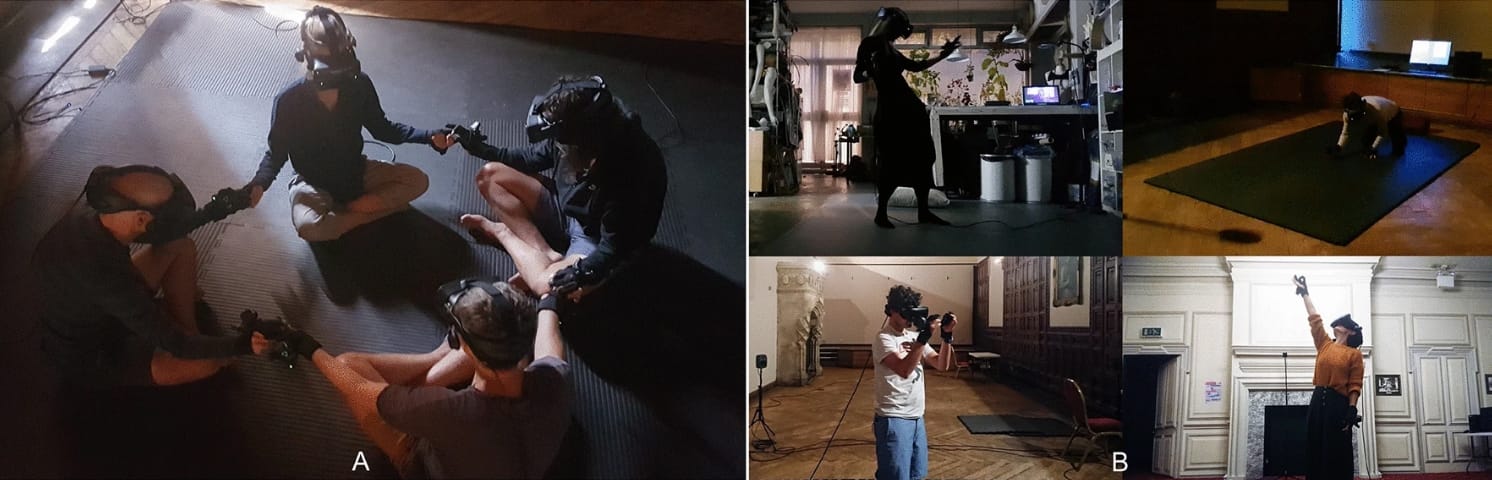
In 2022, molecular biologist David Glowacki and his team at the Intangible Realities Lab at the Citius Intelligent Technologies Research Centre in Santiago de Compostela, Spain published a paper in Nature scientific reports detailing the results of a VR-based meditation system they had developed which allowed users to experience a visualization based guided meditation in a multi-user, virtual environment. During the experience, each user located in different parts of the world wears a Meta Quest VR headset and enters into a darkened void-like space. The participants avatar in the space is a luminous colored ball of light with two additional balls of light representing their hands. The meditation guide is also represented in this way, who proceeds to lead the groups through a series of choreographed meditation routines in which they manipulate virtual, molecular objects and experience a series of transformations based on Glowacki’s own experience of a near-death-experience (NDE). The culmination of the meditation is when all the participants merge their ‘bodies’ together into a single multi-colored cloud of light, after which their avatars slowly dissolve into blackness. Glowacki and his colleagues conducted an experiment with 58 participants to test the efficacy of the system as a therapeutic device, using self-report scales such as the community in self-scale, ego-dissolution inventory, communitas scale and the MEQ30 mystical experience questionnaire and found that the scores achieved on all four scales were statistically indistinguishable from the psychological effects of psychedelic drugs. This study represents the beginning of new possibilities for the use of VR and the metaverse in scientific research.
City in Time
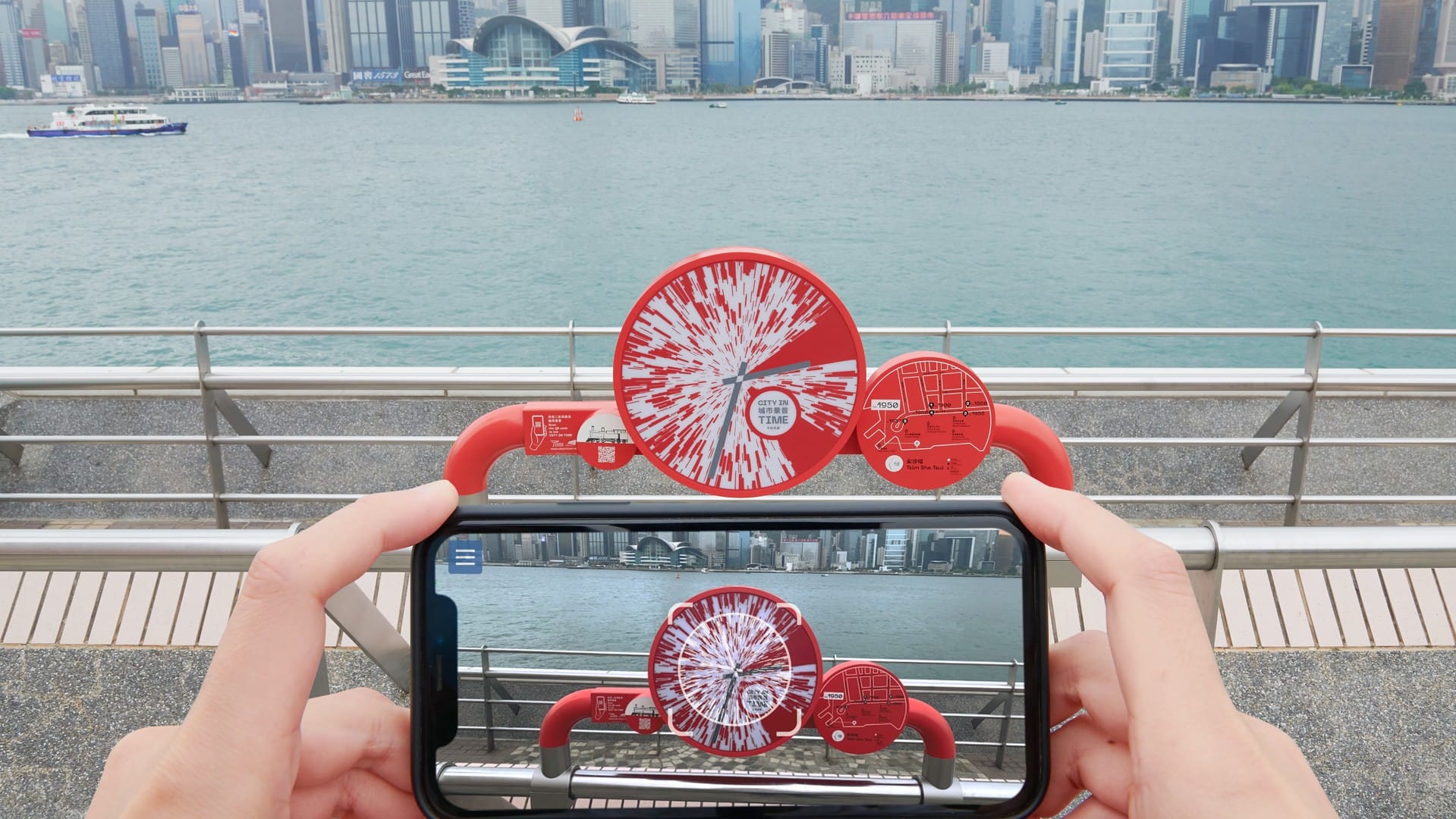
CITY IN TIME is an augmented reality (AR), immersive, urban heritage experience that vividly brings back to life the landscapes of old Hong Kong. Using the technologies of photogrammetry and augmented reality, this project transforms a smartphone or tablet screen into a magic window that reveals images of Hong Kong’s past that are exactly positioned in those places where history happened. CITY IN TIME was originated and developed by Jeffrey Shaw at the Center of Applied Computing and Interactive Media (ACIM) at the School of Creative Media, City University of Hong Kong for the Tourism Commission. It was launched in March 2021 at 28 sites that are rich in cultural heritage located in Tsim Sha Tsui, Central, Yau Ma Tei and Jordan, Sham Shui Po, and The Peak.In 2025 a second phase was added, expanding the project to Lei Yue Mun, Tai Hang and Kowloon City, bringing the total number of locations to 44.
Visitors access through AR markers, 360-degree, 3D panoramas of historical Hong Kong that match the point of view where the visitor is standing. These panoramas, drawn from various time periods, are either rendered through old photographs or through panoramic illustrations which were specially commissioned for the project from contemporary artists who worked from historical photographs. The augmented reality imagery is further enlivened by subtle animations which create a sense of immediacy and thereness in the historical renderings.
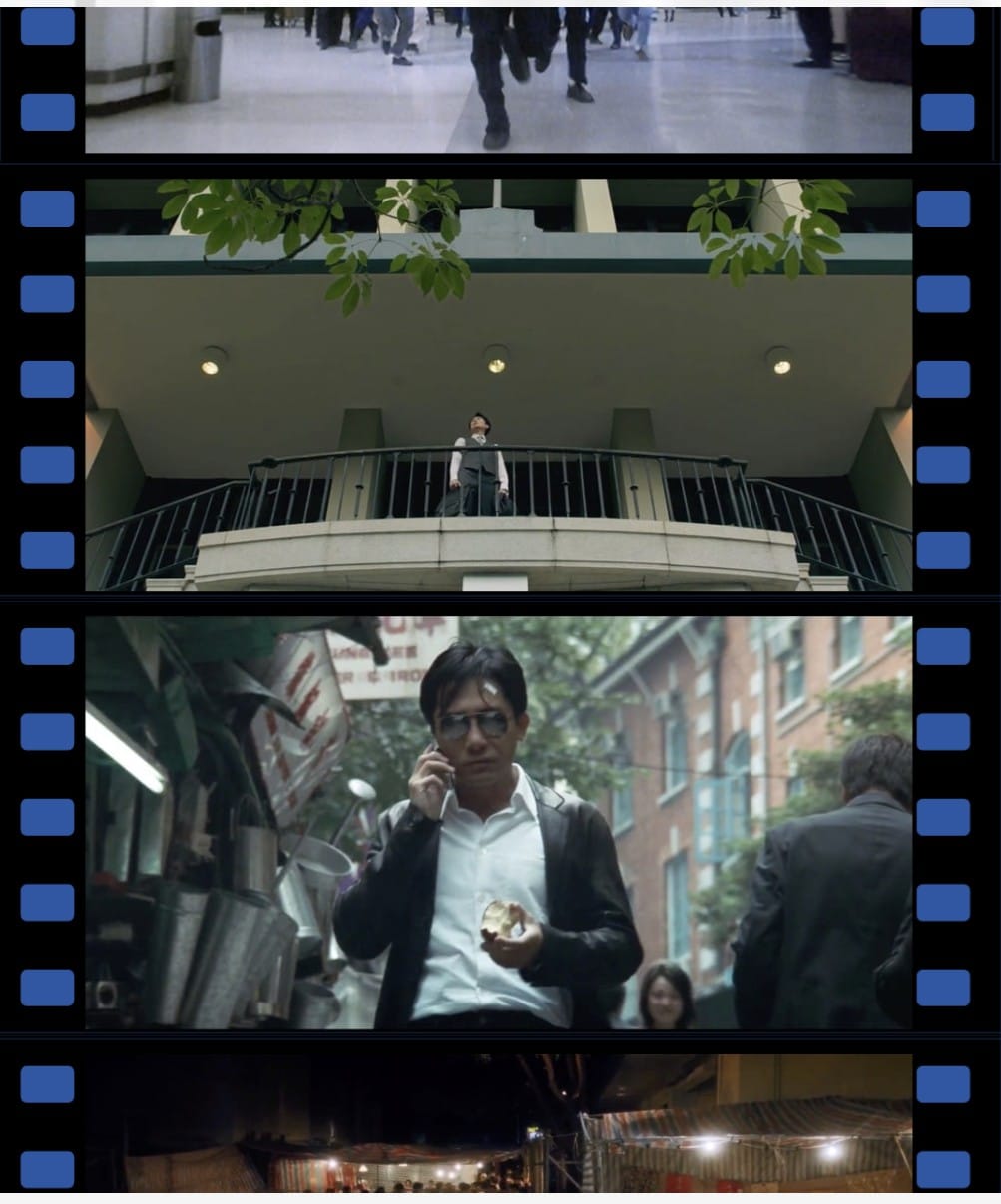
The project serves both casual tourists who may encounter the AR markers at any time and organized local tours that use it as historical and visual support. At selected sites, “Movie Hotspots” incorporate cinematic elements, allowing visitors to revisit classic Hong Kong movie clips on location and experience the city’s film heritage in situ. Viewers also have the opportunity to share the experience of CITY IN TIME on social media.
Movie hotspots clips screenshots
Fashion Asia 2020 Virtual Exhibition — MetaObjects
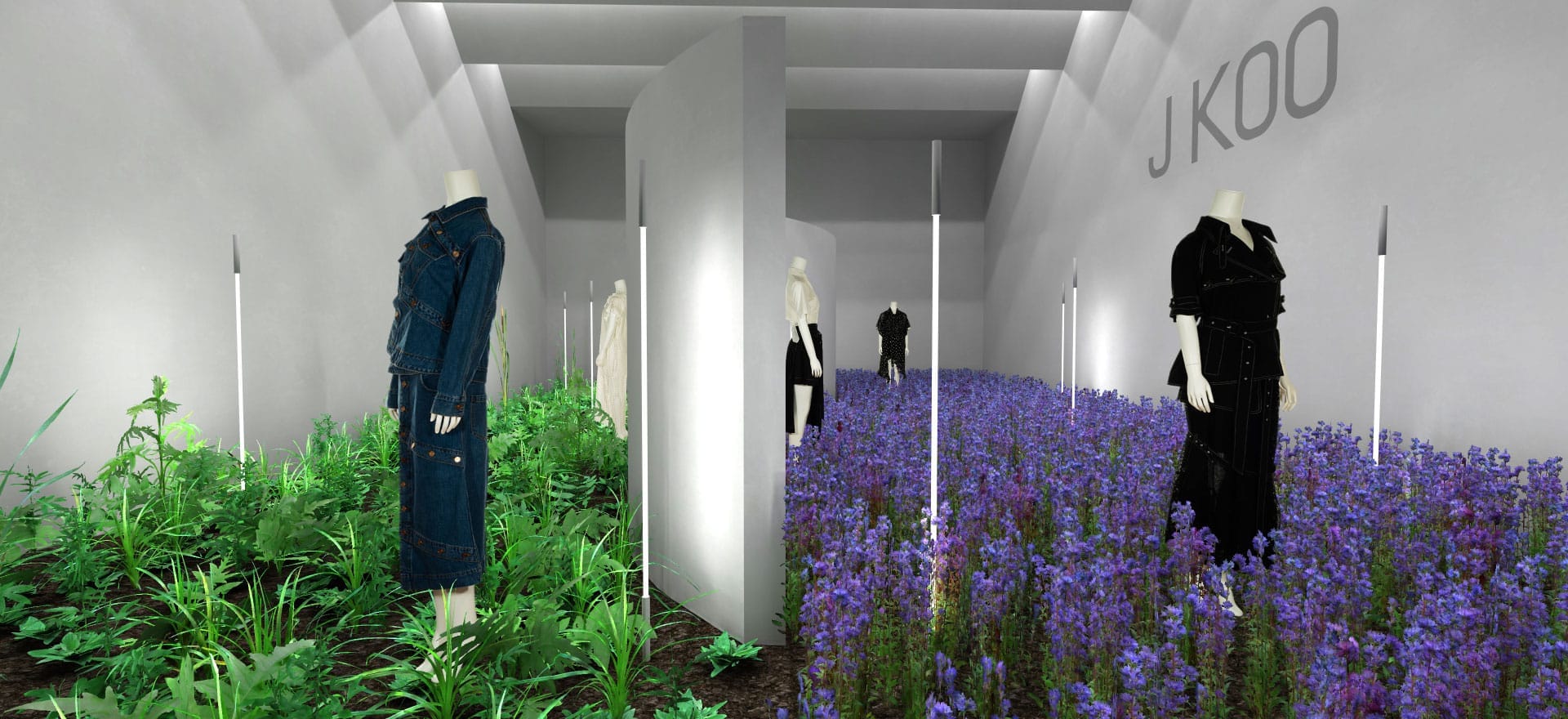
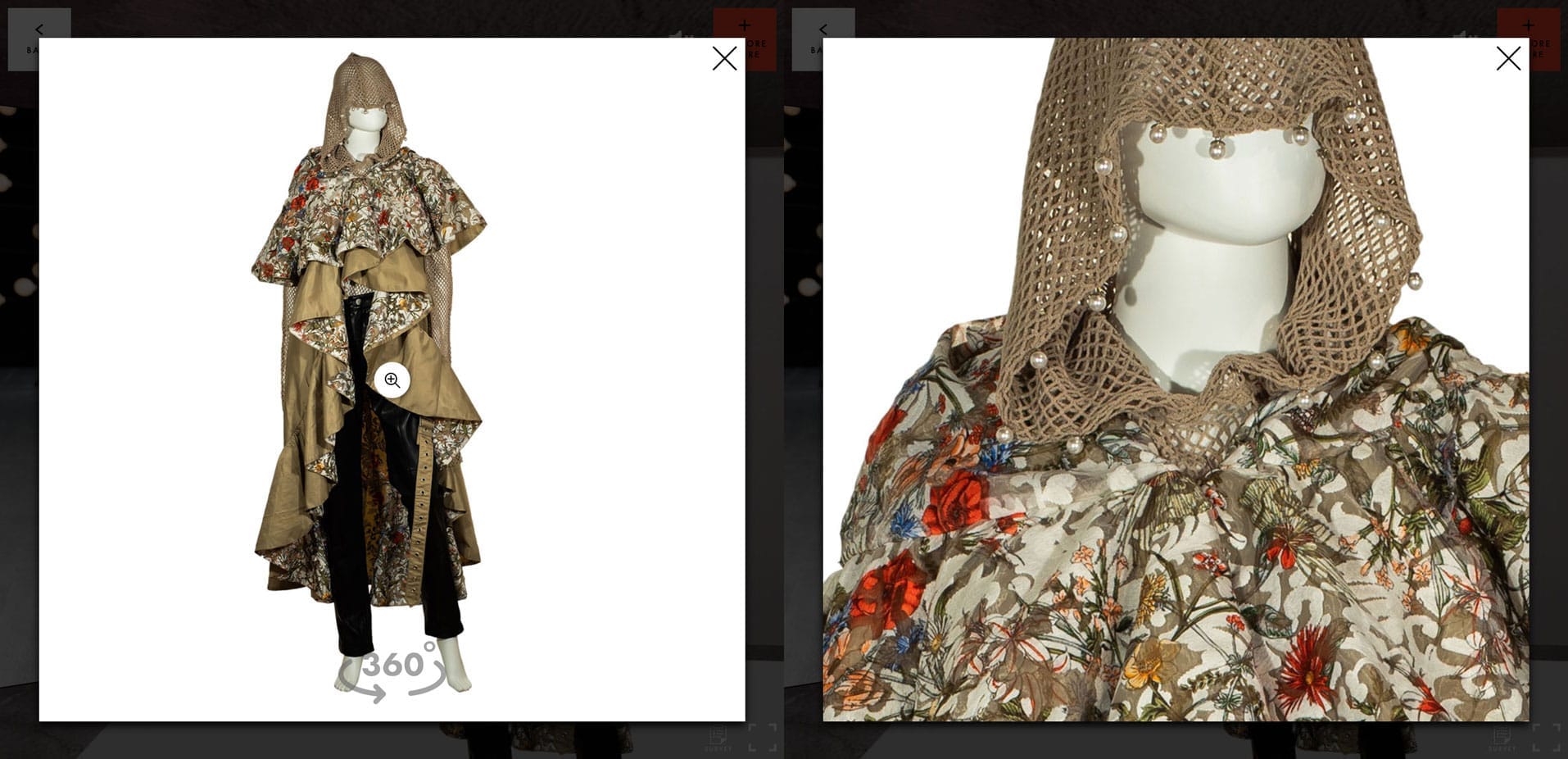
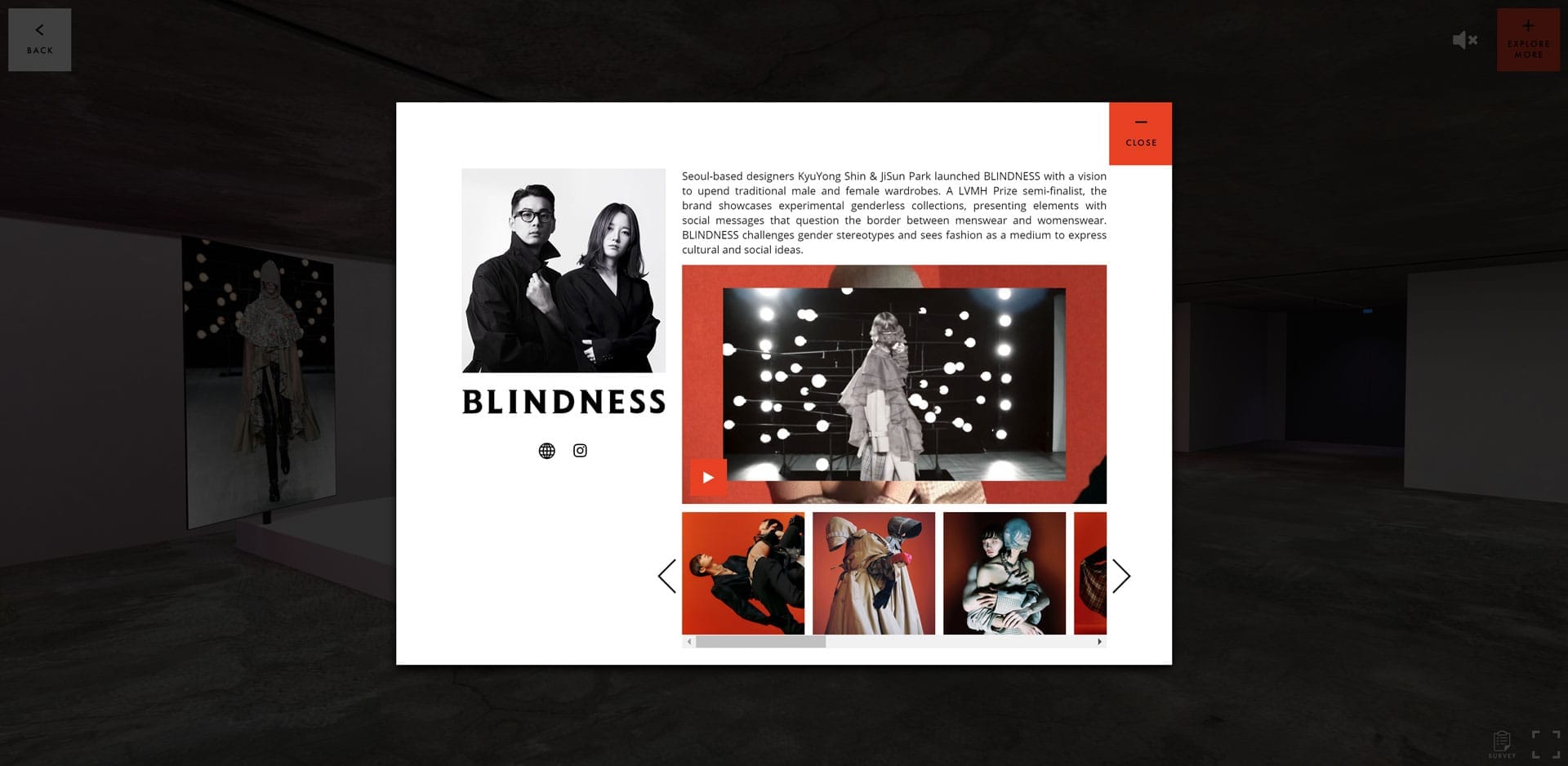
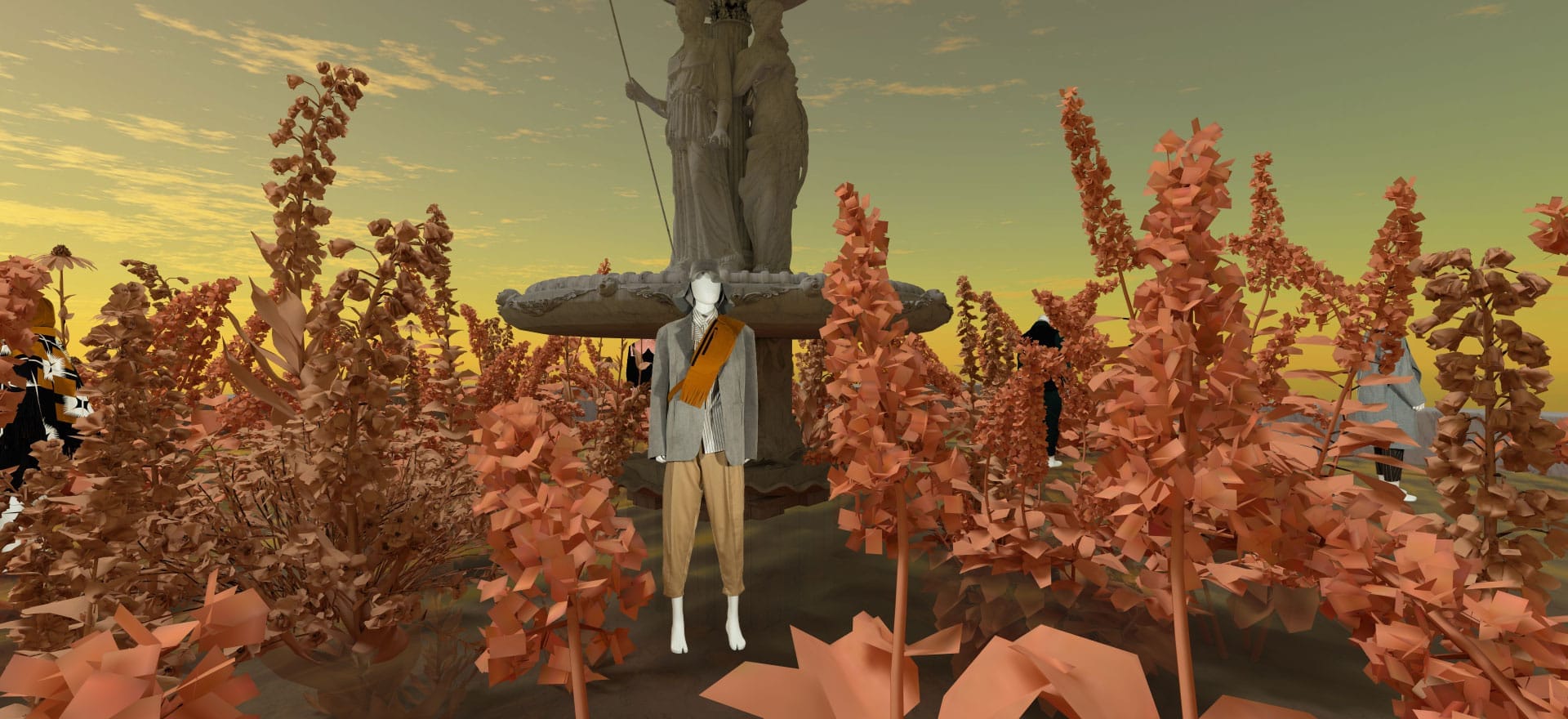
During the COVID-19 period, when physical events were restricted, MetaObjects collaborated with the Hong Kong Design Centre to create a browser-based virtual exhibition for Fashion Asia 2020’s “10 Asian Designers To Watch” showcase. This was one of the Design Centre’s first extensive digital programmes. Ten fashion designers were featured, including Caroline Hu, STAFFONLY, Chen Peng, Blindness, Cornerstone, J Koo, Children Of The Discordance, DEMO, ASAI and Robert Wun.
Instead of static images, MetaObjects designed a unique interactive 3D showroom for each designer, reflecting their individual aesthetic through spatial design, lighting and music. Visitors could navigate the virtual spaces directly in a web browser on a computer or phone, without downloading any additional app. Clicking on an outfit opened a 360-degree viewer that allowed users to rotate the garment and zoom in on high-resolution details. Additional media such as brand videos, look books, runway footage and fashion photography were also included. The exhibition was mobile-friendly and available in English, Traditional Chinese and Simplified Chinese.
Yarli Allison — PRISON? GARDEN! at Tai Kwun
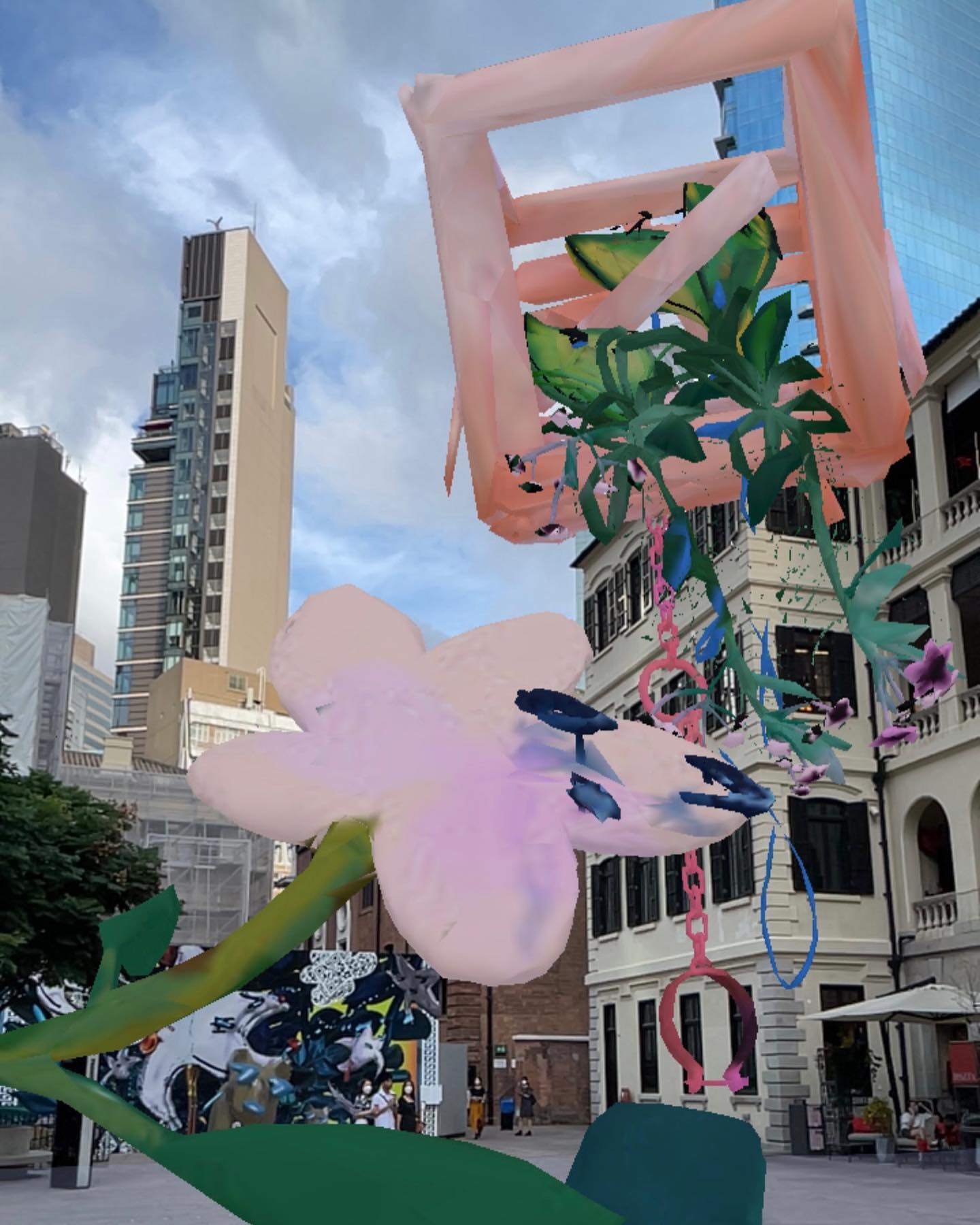
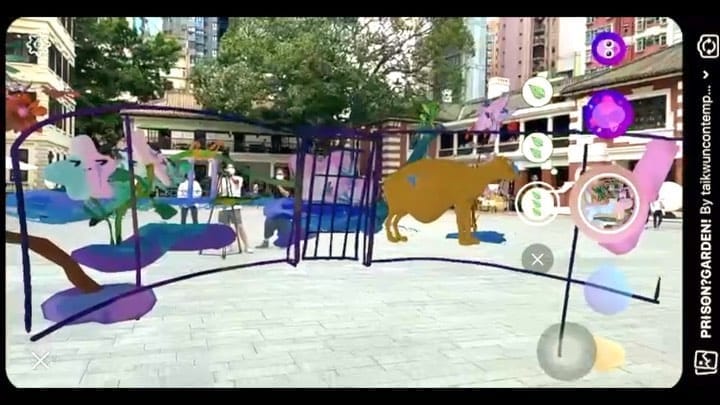
Artist Yarli Allison created the installationPRISON? GARDEN!as part of the 55 Squared programme at Tai Kwun Centre for Heritage and Arts (18 May–31 August 2021). MetaObjects worked with the artist to produce an accompanying AR Instagram filter. Visitors scanned a QR code in the outdoor installation in the Parade Ground and opened the filter on Instagram or Facebook to experience a 3D digital scene overlaid on the physical site.
The work brings together floral characters and architectural elements of Tai Kwun, both physically and digitally. Themes of solidarity and uprootedness run through the piece, filled with complex emotions of anticipation, excitement, grief and anxiety. Through the AR filter, visitors walk through flapping prison gates and under arched prison windows, approaching uprooted plants that appear cheerful yet shed blood and tears. As the artist describes it, stepping into the “pool of tears” invites a sense of compassion — from the Latin root meaning “to-suffer-with.” The installation was curated by Louiza Ho and Jill Angel Chun.
Campus Resources
[Table]
- Items
- Location
Meta Quest 2 Virtual Reality Headset
- Qualcomm Snapdragon XR2, 832 x 1920 pixels per eye, 60Hz, 72Hz, 90 Hz
- Check out and return at the Learning Garden Help Desk during 9:00 am to 5:00 pm Monday to Friday. [CUHK MakerSpace Location]
Meta Quest 3 Virtual Reality Headset
- Qualcomm Snapdragon XR2 Gen 2, 8 GB, 2064 x 2208 pixels per eye,
- Check out and return at the Learning Garden HelpDesk during 9:00 am to 5:00 pm Monday to Friday. [CUHK MakerSpace Location]
HTC Vive Focus 3
- Dual 2.88" LCD panels, 2448 x 2448 pixels per eye (4896 x 2448 pixels combined), 128 GB / 8 GB with support up to 2TB microSD, VIVE Inside-out Tracking,Up to 10x10m play space recommended
- Check out and return at the Learning Garden HelpDesk during 9:00 am to 5:00 pm Monday to Friday. [CUHK MakerSpace Location]
HTC Vive Pro
- Dual AMOLED 3.5" diagonal, 1440 x 1600 pixels per eye (2880 x 1600 pixels combined), SteamVR Tracking 2.0
- Check out and return at the Learning Garden HelpDesk during 9:00 am to 5:00 pm Monday to Friday. [CUHK MakerSpace Location]
Mobile 3D scanning kit
- iPad Pro / iPhone Pro with LiDAR, Polycam licences
- Available for onsite workshops and scanning at MakerSpace. [CUHK MakerSpace Location]
Glossary
[Glossary]
Virtual Reality
- Virtual reality is a 3D, immersive visualization system presented on a head mounted display with head and hand tracking and a field of view simulating human vision.
Augmented Reality
- Augmented reality is the superimposition of virtual objects into the user's environment using a smartphone or head mounted display.
Metaverse
- The metaverse can be defined as immersive, virtual social spaces which persist beyond the user's real-time engagement that extend the ‘real’ world, rather than offering an escape from it.
Game engine
- A game engine is a software platform specifically designed for creating video games, but can be used for artistic works and 3D animation. Utilizes computer 3D hardware for performance.
Non-fungible token (NFT)
- An NFT is a cryptographic asset associated with an artwork, image or video whose uniqueness is guaranteed on a blockchain server.
Blockchain
- A system in which a record of transactions, especially those made in a cryptocurrency, is maintained across computers that are linked in a peer-to-peer network.
Cryptocurrency
- Cryptocurrency is a digital currency using cryptography to secure transactions such as bitcoin or eth.
Proof-of-work (POW)
- Proof of work is a consensus mechanism used in many cryptocurrencies to validate transactions and create new blocks on the blockchain, through the computational solving of mathematical problems which are recorded on a distributed blockchain.
Minting
- The process of registering an NFT on a blockchain server is known as ‘minting’.
Graphics processing
- The ability of a computer to run high resolution video is known as graphics processing, powered by dedicated video cards such as those produced by the company NVIDIA.
Presence
- The feeling of being present in a virtual space in which your physical body is not located, generated via VR and AR environments.
Extended Reality (XR)
- Extended reality is the broader term used to refer to immersive technologies like VR and AR.
Mixed Reality
- Mixed reality refers specifically to AR technologies which combine real and virtual worlds, such as Meta’s Quest 3 and Apple’s Vision Pro headsets.